 Criminal Defense Lawyer Blog
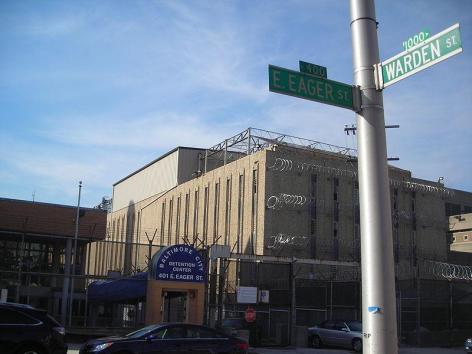 The first of 13 female corrections officers indicted on numerous federal charges earlier this spring has pleaded guilty to racketeering. The indictments came after a lengthy investigation by state and federal law enforcement into the highly profitable drug and contraband smuggling operations that were running rampant in the Baltimore County Detention Center. The indictments, which made national headlines a few months ago, alleged that corrections officers and inmates, particularly inmates of a notorious street gang, conspired to introduce various drugs such as oxycodone, suboxone, and marijuana into the jail population. After the contraband was smuggled through security, the gang members would sell it to other inmates. The gang members and their associates would also sell tobacco, cellphones, and other drugs such as cocaine and heroin. This particular corrections officer, a 31 year old from Randallstown in Baltimore County, was also accused of aiding in moving the contraband throughout the jail facility. She was originally indicted on charges of racketeering, drug trafficking, and money laundering, but federal prosecutors dropped all but the racketeering charge as part of a plea deal.
Continue reading →
Published on:
Corrections Officer Pleads Guilty To Racketeering


 There was no celebratory grand opening, no balloons or customers lining up on the sidewalk. But there were also no police officers waiting to make arrests as customers walked out of Washington’s first operational medical marijuana dispensary with product in hand. Fifteen years after D.C. passed a referendum by an overwhelming majority to legalize pot for medical use, the program is finally off and running. Capital Care, first dispensary to participate in the program, is located just a mile from the United States Capital building where federal lawmakers spent the last decade and a half attempting to block this day from becoming a reality. The dispensary is also located steps away from the ATF headquarters, and other federal law enforcement agencies that are still empowered by federal laws, which have no mention of legalized pot for any purpose. Thus D.C. has become the latest jurisdiction to step into the common dilemma of local versus federal law with respect to marijuana legalization.
 The Baltimore City Police Department has announced that one of their own has been suspended with pay and is currently under investigation for excessive use of force during an arrest. The incident began when a 14-year-old boy was spotted driving a stolen car. Officers of the city police force’s auto theft unit got wind of the whereabouts of the stolen vehicle being operated by the unlicensed driver and began their pursuit. Just minutes into the chase the inexperienced driver lost control of the car and went head on into a concrete curb, which briefly sent the vehicle airborne. The car then crashed into another parked vehicle in a commercial lot and came to its final stop. Seconds later multiple police cars arrived on scene, and with guns drawn pulled the juvenile out of the heavily damaged vehicle. As the boy was pulled out of the vehicle and surrounded by close to ten police officers, another officer ran up and appeared to strike the boy after he had been detained. Seconds later the same officer appeared to stand over and strike the boy once again. The only reason that this information has come to light is the fact that the entire incident was caught on video by a news helicopter. The helicopter began following the stolen car before it ran a curb and went crashing into a vehicle. The helicopter then stopped overhead and zoomed in on the boy being pulled out of the car.
 The state’s highest court recently ruled on a lawsuit involving dram shop laws, an issue that has been hotly debated for the last few decades. In essence, dram shop laws refer to the liability of bars and restaurants for the actions of their patrons. A state with dram shop laws provides a third party with a legal right to sue a bar or restaurant, which has continued to serve a patron that is visibly drunk, if the patron causes some sort of injury to the third party. Dram shop is simply a traditional term for any establishment that sells alcohol. These laws typically apply to DUI accidents involving serious injury or death. Currently there are 43 states with some sort of dram shop statute, but both the Maryland Legislature and the Courts have not been inclined to follow the majority on this issue, with neighboring Virginia and Delaware sharing the same view. Numerous bills have been proposed over the years, but none has ended up on the governor’s desk for a signature, and the state’s highest court has never upheld a civil action against a bar or tavern for an act of a patron that occurred outside the establishment.
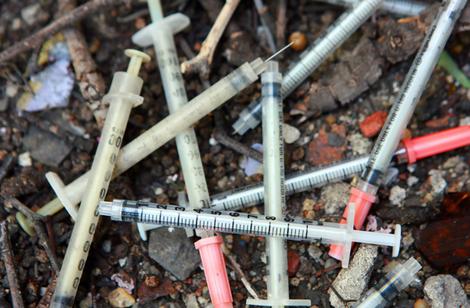 A recent report released by the State Department of Health has brought disturbing news regarding drug use in Maryland. According to the department, drug overdoses increased a considerable 15 percent from 2011 to 2012. The likely culprit for the increase in drug fatalities is the popularity and resulting pervasiveness of heroin in all areas of the state, from downtown Baltimore to the suburbs. We have blogged and posted web pages about the comeback of heroin, and these statistics simply offer more proof that the drug is enjoying a second coming, albeit a deadly one. In 2011 the state reported 245 heroin related deaths, but last year this number ballooned to 378, while the total alcohol and drug related deaths rose from 663 to 761 from 2011 to 2012. Prince George’s County and Baltimore City were responsible for the jump, as most other areas of the state reported a similar number of drug fatalities in the last two years.
 The Maryland State Police officially launched its DUI prevention taskforce at a press conference in Jessup last week. The taskforce is nicknamed SPIDRE for State Police Impaired Driving Effort, and consists of seven specially trained troopers. These troopers will move throughout the state with the goal of impacting every legal jurisdiction. For now though, the taskforce will concentrate its efforts in areas that law enforcement officials have identified as DUI hotspots. These areas, which are documented to have the most alcohol related crashes and citations, include Prince George’s County, Baltimore County, Howard County, Ocean City, and Hagerstown. The taskforce first deployed in PG County back in May and conducted over 1,300 traffic stops. The trooper team made 254 DUI arrests and 53 criminal arrests, and issued over 3,500 traffic citations and repair orders. Clearly the task force is not shy when it comes it issuing tickets, as they averaged almost 3 per traffic stop.
 Law enforcement has reported that six Pennsylvania residents were recently arrested for various drug crimes in Ocean City. To call the out of state residents tourists may be a bit generous, because it seems from the police reports that the six young men and women may have been on the Eastern Shore for business purposes, as in selling the products they were arrested with. The arrest began as most drug arrests do, with a traffic stop for a seemingly harmless infraction. Upon approaching the car, the Ocean City Police officers allegedly observed the occupants acting nervous and suspicious. Thereupon, the cops ordered the occupants out of the vehicle and conducted a search. It is unclear whether the officers obtained permission to search, whether they lied about obtaining permission to search, or whether their observations gave them probable cause to detain and search. What is clear is that the driver and five passengers were all arrested for possession of marijuana and possession of LSD. Three of the occupants were charged with felony possession with intent to deliver, and one was charged with possession of a concealed dangerous weapon, a butterfly knife found on her person. The driver was also issued traffic citations including failure to wear a seatbelt, which undoubtedly was the initial cause of the traffic citation. Four of the occupants were released at the police station, and the other two were taken the Worcester County jail and released after posting a $2,500 bail.
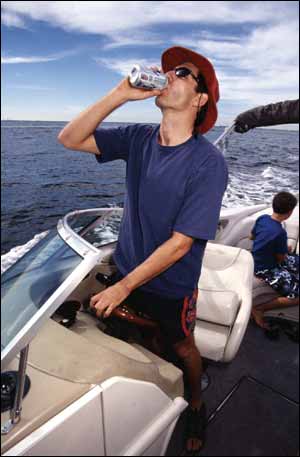 Maryland law enforcement has officially implemented a boater safety plan in response to the rising number of serious injuries and fatalities on the hundreds of state waterways. The plan, entitled Operation Dry Water, is actually a national initiative, which was created to raise awareness and enforcement of incidents of boating under the influence or BUI. According to the National Association of State Boating Law Administrators, nearly 17 percent of all boating fatalities are caused by alcohol use. Lawmakers and law enforcement agencies decided to adopt the national initiative after a recent three year spike in waterway deaths. In 2011 there were 24 Maryland waterway fatalities and last year there were 11, which is double the 10 year state average.