 Criminal Defense Lawyer Blog
About a year ago the Blog posted an article addressing the issue of whether it is legal to video record a police officer engaging in his or her duties. While there is clearly no state or federal law prohibiting this protected First Amendment behavior, the answer is not so simple. In other words, despite no specific law prohibiting the act of filming a cop, it’s not legal if the police can just arrest you for disorderly conduct or some other petty offense. A year ago, the Maryland Attorney General issued an opinion advising police departments around the state that the public has the right to video record its officers. The Department of Justice, or DOJ, also filed an 11-page letter with the court in a Baltimore City civil rights lawsuit. The lawsuit was based on a 2010 incident at the Preakness where a man’s phone was confiscated after he was seen recording the police make an arrest. This DOJ letter pointed out that the Baltimore Police Department’s policies do not adequately protect a citizen’s right to record cops. Recently, the DOJ has once again reiterated its stance on this issue by filing another letter with the United States District Court in Maryland.
Continue reading →
Published on:
DOJ Reaffirms Citizens’s Right To Photograph And Record On Duty Police


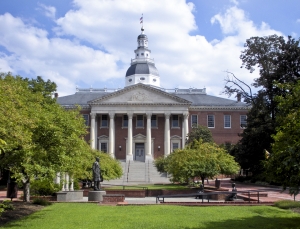 The 2013 legislative session officially came to an end last month, but 265 bills still awaited Governor O’Malley’s signature before they could make the transformation to state laws. The bills covered dozens of different fields of law including health care, environmental law, consumer regulations, education, and of course criminal law. The most notable bills that crossed the governor’s desk happened to be right up our alley in the field of criminal law, so naturally those are the bills we will discuss. The blog has followed the progress of state marijuana reformation for the past year, and it seems for there is now a small amount of closure on the topic. The signing of the medical marijuana bill closed the debate until next year’s session about how far Maryland was willing to move toward legalization. And to some up what this bill actually means for the state residents, it’s safe to say the law is a lot of bark and a little bite.
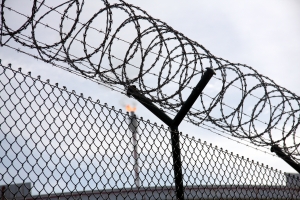 The last time Baltimore was headlining national news articles the Ravens had just completed their unlikely and dramatic run to a Superbowl championship. It’s been a few months, but our great city is back in the national headlines, only this time there is no celebration to be had. On the contrary, the past two weeks have been extremely embarrassing for all those involved with the City’s corrections department, as well as for city and state politicians and government officials. Over the past year law enforcement agencies from the federal and state governments have been investigating allegations of organized gang activity within the walls of the Baltimore City Detention Center. Last week, the United States Attorney unsealed the bombshell indictment that charged various inmates and prison guards with running a large-scale racket within the jail’s walls. The indictment alleged that gang members sold hundreds of thousands of dollars of drugs and other contraband that was smuggled into the jail with the help of 13 corrections officers. Other allegations include bribery, extortion, assault, robbery, witness retaliation, and even murder. All those charged in the federal indictment face lengthy prison sentences for racketeering in addition to the individual criminal acts.
 The Blog has chronicled some interesting criminal behavior in the past year. To date, the most notable goes to the man charged with
 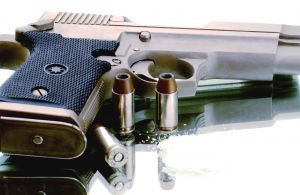 Maryland is widely known as having some of the strictest gun laws in the entire country. Few states have provisions that even come close to the highly controversial law, which requires citizens to prove a good and substantial reason to possess a carry permit. Maryland also requires mandatory background checks for all gun purchases, regardless of whether the seller is a licensed dealer or a private party. There is also a mandatory seven-day waiting period in order to buy a gun. And now after the close of this years legislative session in Annapolis, the strict are bound get stricter after The General Assembly passed new firearms regulations. The bill, which has generated national attention, is awaiting Governor O’Malley’s signature before it becomes law. All prior indications from the Governor’s office have signaled that signing on the dotted line is a foregone conclusion. The new law will have a sweeping impact on all aspects of firearms regulation including purchasing, possessing, and selling.
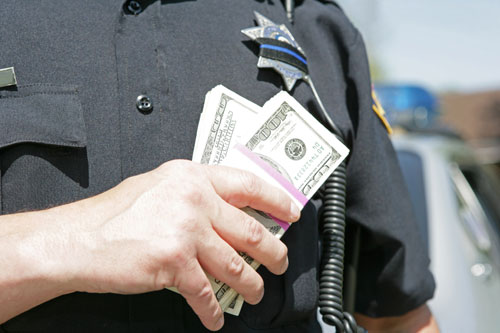 The FBI and the United States Attorney for the District of Maryland recently announced that a 36 year-old Baltimore Police officer has pleaded guilty to multiple drug and gun felonies. The investigation began in early 2012 when the feds received information from an anonymous source that the crooked cop was trafficking in stolen property. As a result of the tip and other corroborating information, feds secured a warrant to wiretap the officer’s cellphone. Through the wiretap law enforcement learned that the officer was selling stolen iPhones, iPads, and other electronics, some of which were confiscated during arrests and never submitted into evidence. Federal investigators also became aware of a new development, that the officer was involved in a more sophisticated and organized criminal scheme with a street level drug dealer.
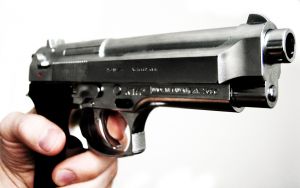 A little over a year ago, Federal District Court Judge Benson Everett Legg ruled that the “good and substantial” provision of the Maryland concealed carry gun law was unconstitutional. This provision required citizens to prove to the state Handgun Permit Unit that they had a good and substantial reason before being granted a concealed carry permit. When a Baltimore County man was denied one such permit, he filed suit in federal court, and the Second Amendment Foundation, which advocates for the preservation of the right to carry, joined in the lawsuit. Despite the Attorney General’s best efforts, Judge Legg concluded that the law was too broad to satisfy the state’s compelling interest to protect its citizens and prevent crime. According to the Judge the good and substantial provision did not safeguard the public from every handgun related hazard, and therefore did not do enough to justify a significant limitation on the constitutional right to bear arms. But just last week, a three-judge panel sitting for the U.S. Court of Appeals for the 4th Circuit unanimously disagreed with Judge Legg, and reversed his decision.
 Supporters in the fight to bring legal medical marijuana to Maryland received some uplifting news a few days ago from the governor’s office. While O’Malley did not actually come out and personally support legal use of the drug, he did give the go ahead for his health secretary to back the bill. During a hearing in Annapolis last Friday, secretary Sharfstein told lawmakers that the governor’s administration would now support medical marijuana legislation. The governor’s office did not address pending legislation for decriminalization and legalization of recreational marijuana use, but the health secretary’s statements did signal a reversal from the administration’s position on medical use this time last year.