 Criminal Defense Lawyer Blog


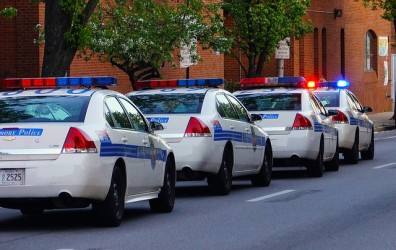 Not that they deserve one, but the Baltimore Police Department cannot catch a break. After months of negative publicity surrounding the death of Freddie Gray, dozens of new accusations of police brutality, spiking crime rates, and allegations of lack of leadership that led to the firing of their top cop, the department is back in the news. This time the news is for an incident that happened five years ago, but these days any tidbit of information about cops in Maryland’s largest city will make headlines. Back 2010 a federal department of defense employee was arrested for violating the city’s loitering law, when he allegedly refused to enter a Baltimore Street business or keep walking. Although prosecutors eventually dropped the charges, and the criminal case has since been expunged, the man spent 12 hours in jail and missed work the next day. He hired an attorney after the incident, and a lawsuit against the city was ultimately filed. After both parties failed to reach a settlement agreement the case proceeded to jury trial in the circuit court for claims of battery, false imprisonment, and false arrest.
At trial the man testified that he was not violating the loitering law, and to the contrary he was arrested for simply talking back to the police officer. The man also testified that although the criminal charge has been expunged, record of his arrest still exists in his FBI criminal background database. This has apparently prevented him from moving up the ladder and earing higher wages while working at the Pentagon. While Maryland has a user friendly expungement process, the FBI, who keeps records of all arrests and criminal charges, is under no obligation to follow a state order to expunge a record. This is a common problem, and a tough pill to swallow for any person who is wrongfully arrested or prosecuted. At the close of the case the jury awarded damages in the amount of $272,790 in favor of the plaintiff. The city appealed, but then agreed to settle for an even $200,000.
The verdict and eventual settlement may seem high considering that the man was not injured, and the criminal case was expunged before it went to court. But the arresting officer who was the target of the civil suit was the opposite of a defendant warranting sympathy. In 2011 the officer was convicted for his role in a city towing scandal where officers were illegally paid by a body shop to refer customers, and falsified accident reports to increase damage claims. The officer served 8 months in federal prison and was fired from the police department. He was also the subject of two other large civil settlements against the Baltimore police; in one case he was accused of breaking a woman’s wrist after pulling her from a car, and in the other case he was accused of beating a handcuffed man. After the city recently settled his third civil case, the cop went on record as stating the settlement was “unbelievable” because the plaintiff had no injuries. These comments prove the shamed ex-cop still doesn’t get it, as you simply cannot put a price on wrongfully arresting, jailing, and prosecuting an innocent person. The officer apparenlty wants his job back, which actually is unbelievable. All the city needs right now is to reinstate an ex-cop convicted of fraud and corruption in federal court, and three times accused of beating, injuring, and wrongfully arresting the citizens he was sworn to protect. Unbelievable indeed, although delusional might be more accurate.
 The shamed Baltimore City public school teacher charged with eleven theft crimes almost a year ago has now pled guilty to one count of felony theft scheme. This past week in the Circuit Court in downtown Baltimore a special statewide prosecutor announced the state would only pursue one of the counts in exchange for the guilty plea. The ex-principal will now avoid what would have been a lopsided trial, as the prosecutor had ample evidence connecting the defendant to almost $50,000 of missing school activity funds. The defendant, who is currently out on bail, was not sentenced at the plea hearing. Rather, sentencing has been set for early October on the one felony count that carries a maximum jail sentence of fifteen years. There is also the possibility of hefty fines and mandatory restitution for the charge, which is classified as theft scheme with a value of $10,000 to $100,000. This offense does not carry a minimum mandatory jail sentence, unlike the embezzlement count that was dropped.
 The last couple of months have been quiet on the medical marijuana front, and as a result it did not take much of a pot story to produce headlines at a variety of Maryland news outlets. Last Friday a town planner for the Talbot County seat of Easton announced that the site of a former tool manufacturing plant would receive local zoning approval to become a marijuana growing facility. The planner decided that growing legal pot classifies as agriculture, which is proper in all areas of the Eastern Shore town, save for the historical downtown area. Keep in mind that this facility would strictly be for growing, and would have no dispensing capability, or relationship to any potential local dispensary. Whether this actually turns out to be a story of substance remains to be seen, as the growing company who pitched the town planner has not yet received a state license to grow medical pot. But all the downtime created by the Maryland Medical Marijuana Commission’s methodical pace has left the people and consequently the media in a jumpy mood; nearly any small development will make headlines at this point.
 The FBI and the Montgomery County Police recently announced the break up of a large-scale drug ring operating out of a residential area near Rockville. Monday during the early morning hours, as many as 100 state, local and federal law enforcement officers raided numerous townhomes in the Bel Pre development, as well as a business in Prince George’s County. The raids yielded a narcotics, multiple firearms, and over $70,000 in cash. All told 18 people were arrested, and now the defendants face felony drug charges in federal court. All but one of the defendants resides in Maryland, with the non-resident being from Pennsylvania. The defendants are charged with conspiracy to distribute heroin and cocaine, and could face other charges based on the evidence that was seized.
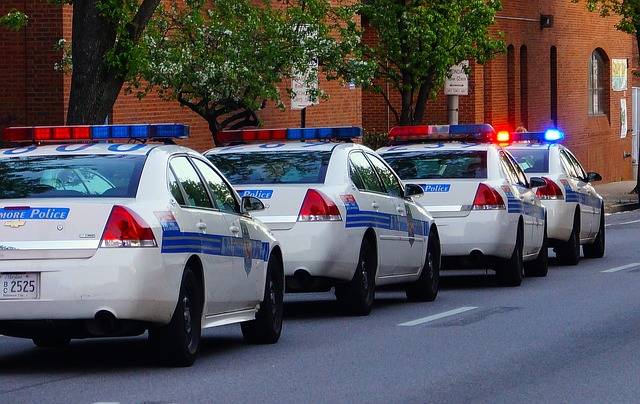 News trucks and National Guard Humvees are no longer lining the streets of Baltimore, but the city is still experiencing elevated crime levels and widespread violence following riots that generated worldwide attention. Forty-two people were murdered within city limits last month, the highest monthly total in over 40 years, and millions of dollars worth of narcotics have fallen into the hands of drug dealers in the last few weeks. The murder rate is attributed by some as a direct result of a lower police presence in high crime areas, exactly the opposite of what is needed. Police in the tensest areas such as the western district of Baltimore City have allegedly shifted their priority to self-preservation rather than protecting the public. According to an anonymous supervising officer who was interviewed on CNN, cops in the western district are basically ignoring orders from the police leadership to vigorously patrol, and are just simply responding to 911 calls. This passive approach is likely causing a sense of lawlessness in certain areas, and in turn wrongdoers are becoming bolder. Although the police commissioner has no plans to step down, there is growing discontent about the department’s leadership going forward. One city councilman has publically called for a new police commissioner, stating that he knows rank and file officers have lost confidence and respect for their commander. This environment has officer moral and motivation at an all time low, and city residents are suffering the consequences.
 Toward the end of the 2015 legislative session the General Assembly convincingly passed a modification of the marijuana decriminalization law. The modification served to cure an inherent defect in the 2014 decriminalization law by removing the possession of marijuana paraphernalia from the catalog of CDS criminal offenses. It was a logical and necessary fix to the ambiguous situation created by the 2014 law, which punished the possession of pot only by a civil fine, yet still punished possession of the device used to ingest the pot with criminal sanctions. This modification was expected to take effect in October of this year, thus ending the ambiguity and giving law enforcement and prosecutors more time to deal with actual issues of public safety. The only hurdle was an approval from our recently sworn governor, which at the time seemed like a forgone conclusion. But this past week Hogan flexed his socially conservative muscle and vetoed the bill, baffling some lawmakers and angering marijuana reform advocates all over the country. So for at least another year, the only thing criminal about smoking a joint Maryland is the rolling paper that keeps it together.
 Drug and alcohol related deaths have increased statewide over the past few years, and the jump from 2013 to 2014 was so significant that the governor has declared a health crisis in Maryland. The state health department recently released its annual report for this past year, and the numbers are frightening to say the least. Over 1,000 people died directly from drug and alcohol overdoses last year, which represents a 21 percent increase from 2013. More than half of those deaths were the result of heroin, a narcotic whose popularity has been increasing exponentially over the past decade. In his first year of office, Governor Hogan has made it a priority to combat drug overdoses, and he has taken proactive measures such as approving a bill expanding the use of Naloxone, an opioid antagonist that reverses the effects of heroin. Many police officers statewide, including those in Anne Arundel County, now carry this powerful life saving drug. Chances are that more departments will add it to their officer’s essential police equipment in the future. Ultimately though, the governor’s focus will be on breaking up heroin trafficking rings, and on educating the youth about the dangers of even one single dose this dangerous drug.
 The FBI recently concluded a two-year investigation of five Baltimore City public works employees, and now two face bribery charges in the United States District Court. The other three face theft and conspiracy charges, which are charged under a similar federal law. Cell phone wiretaps ultimately led to a raid in which federal authorities confiscated physical evidence to aid U.S. attorneys in proving their case against the five. One of the male defendants has been charged with conspiracy to solicit bribes concerning a program receiving federal funds and the only female defendant has been charged with the same, plus an additional count of bribery. The other three males are charged with conspiracy to steal from a program receiving federal funds and with theft.
 As a criminal defense blog, we have posted numerous articles on the unfortunate incidents of police brutality and misconduct in the state of Maryland. While it seems the number of these incidents has been increasing over the past few years, it is more likely that technology is simply exposing them at a higher rate. Police misconduct is an epidemic in our country that we can no longer ignore, but regardless of our condemnation of misconduct, as defense attorneys we fight to assure that all defendants are afforded a fair trial and a competent defense. In the Gray case the officers happen to be defendants, and justice will only be achieved if they too are given a fair trial. The Baltimore City State’s Attorney made the bold decision to charge the officers shortly after the medical examiner’s report came back with the medical conclusion of a homicide. While some of the city prosecutor’s public comments were inappropriate, her decisiveness benefited the city, the family of the victim, and for the most part did not unduly prejudice the defendants.
 Back in October we posted an article discussing the prospect of the Baltimore Police equipping all of their street officers with wearable digital recording cameras. A short time after the article appeared on the Blog, the city counsel approved a bill to make these body cameras a reality. Nothing ever came of the bill, and it was not highly publicized because the mayor quickly vetoed it. The mayor’s office cited budget and privacy concerns with the bill, but some have speculated she only vetoed it so her own version, which she proposed in February, would end up becoming law. The budget concerns are hardly insurmountable, even for a police department that is notorious for spending way too much money on overtime and for officers on paid suspension. The events of the past three weeks have made it as apparent as ever that the police department needs to stop making excuses and get its act together. The body camera program will protect the public and the officers themselves, and could prevent civil unrest due to citizen officer contact from ever happening again. There is simply no price too high for these assurances, especially not at $400 per body camera. And yes, we understand the camera program will require a support system that will likely cost more than the equipment, but police misconduct cannot continue to put lives in danger and perpetuate racial conflict.